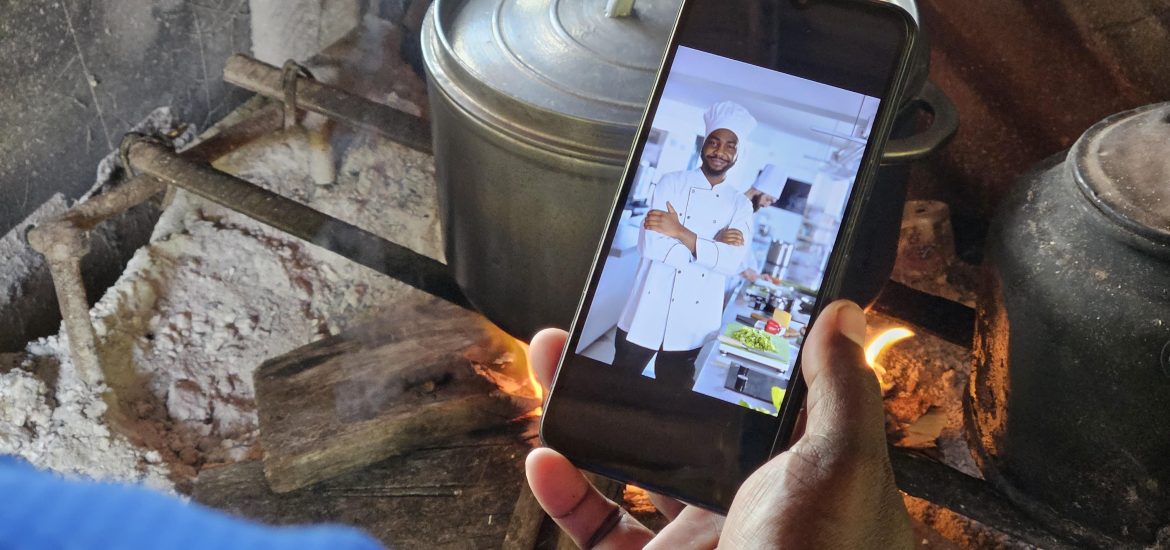
I have been coming to the Solomon Islands for the past nine years. I have watched this country change faster than almost anywhere else on earth, and I write this out of genuine concern — and genuine admiration.
I remember when I could only make an internet call early in the morning, before other people got up and the network slowed to almost nothing. Then the undersea cable arrived in 2019. Then bigger data packs. Then Starlink — and today, even villages that never had phone connection can now boast of unlimited high-speed internet, straight from the bush kitchen. The change has been extraordinary. In the west, this kind of transition happened gradually over more than twenty years. Here it happened in five.
But underneath the entertainment there is a business model: keep you watching, keep you wanting, and make you feel like your own life is not quite good enough. Your dissatisfaction is the product.
What the screen is selling
Social media sells a version of western life that most westerners themselves would not recognize. The big houses, the shiny cars, the gadgets, the perfect kitchens — this is advertising, not reality. It is designed to keep you watching, wanting, and feeling like your own life is not enough.
In the Solomon Islands, someone can be sitting in a bush kitchen, sago palm walls around them, firelight flickering, watching a cooking show set in a gleaming western kitchen with marble benchtops and appliances that cost more than a canoe. There is hardly a wider contrast in the world. And yet the screen makes it look like that is the normal life, and the bush kitchen is the problem. It is not. It may well be the other way around.
I understand why Solomon Islanders are drawn to it — and it is not only the young. Parents want better for their children. A paid job in town, a proper house, school fees covered. So families move to Honiara, or other townships, looking for that better life.
But city life has a way of costing more than it pays. Even those who find work discover that wages get eaten up by rent, transport, and food that used to come free from the garden. The more you earn, the more the city demands. And those who climb highest — who actually achieve what they set out for — are often the ones who see it most clearly: that somewhere along the way, they left behind something that money cannot buy back.
The people still in the village rarely hear that part of the story. What travels home is the highlight reel — the new phone, the good news, the image of a life that is working out. The longing is not wrong. It is human to want something more. The question is not whether to want more — it is what that more should look like.
What the west is actually looking for
Let me tell you what life in the west actually looks like from the inside, because I have lived it.
Most ordinary people in western countries are not living the life on your screen. They are tired. They are busy. They are lonely — genuinely, seriously lonely. Loneliness has become one of the biggest public health concerns in the developed world. People are more digitally connected than ever before, and more personally isolated than at any point in living memory.
Western families don’t have time for much. Children go into professional childcare from barely one year old because both parents have to work full time just to pay rent. Family meals together are rare. Sitting down with an elder to hear a story — really rare. Time has become something people ration like a scarce resource.
And food? The west figured out how to make food cheap by shipping it halfway around the world. Everything is available in the supermarket, all year round, at low prices. It seemed like progress. But people are longing for what existed before — the local market, the farmer you could talk to, the vegetable that was picked yesterday. Farmers markets are returning to western cities, and people are willing to pay three times the supermarket price for something grown closer to home. Not because they have to. Because they are hungry for something the global food chain cannot give them.
Does this sound familiar?
Probably not — life in the Solomon Islands is completely different.
Lonely? Here you cannot walk to the market without stopping five times to greet someone. No time? The whole extended family is together most evenings. Paying a premium for local food? In the Solomon Islands, local food is simply what food is. There is no alternative to long for — it has always been there.
Life in the west probably sounds a little bit silly from where you are standing. And in many ways, it is. These are problems that the western world has created for itself, slowly and without noticing, over many decades. And now it is spending enormous amounts of money trying to find its way back.
What you already have
The west is longing for connection. In the Solomon Islands, your neighbour knows your name, your family, and probably what you had for dinner. That kind of belonging is something people in the west pay therapists to help them find.
The west is longing for time. Here, sitting with your family and just talking is an ordinary evening. When did you last listen to an old person tell a story that went on longer than expected — and that was perfectly fine? That is not wasted time. In much of the world, that is a lost treasure.
The west is longing for real food — food with a face behind it, grown in soil you can name, harvested this week. In Honiara you can buy that at any market for a fair price. In the village, the garden may be an hour’s walk away, but visiting it is part of the daily rhythm — food is harvested fresh, by people you know, and eaten the same day. What has become a luxury in the west is still just ordinary life here.
These are not small things. These are the things that wealthy societies are spending enormous amounts of money trying to recover, and mostly failing.
I am not saying the Solomon Islands has no problems. I am not saying development is bad, or that young people should not have big dreams. But before you trade what you have for what is being advertised to you, make sure you know what you are giving up. And make sure what you are reaching for is actually real.
A word to young people — and their parents
You are not behind. You are not missing out. You are standing in the middle of something that people on the other side of the world have spent generations losing and now desperately want back.
The question is not whether to develop — of course things can be better. The question is what you build on. The western model says: leave what you have behind and start fresh. But what if the foundation already here — the community, the land, the culture, the time for each other — is not the obstacle to a good life, but the basis of one?
What would it look like to develop the village rather than abandon it? To bring in education, healthcare, and opportunity without dismantling what makes village life rich? To make staying an attractive choice, not just a fallback for those who couldn’t make it in town? That is not a step backwards. In many ways, it would put the Solomon Islands ahead of a world that is only now realising what it gave up.